In June of this year, I went to vote in the NYC Primary Election fully confident in my choice for mayor.
I consider myself politically engaged and well-informed. I had done my research, paid attention, and walked
into the voting booth without hesitation… until I looked at the ballot.
The Problems
1. Most people don’t know who their local politicians are.
2. There’s a lack of accessible civic engagement tools.
3. The two-party system oversimplifies political identity.
4. Propaganda fills the information gap.
The Solution
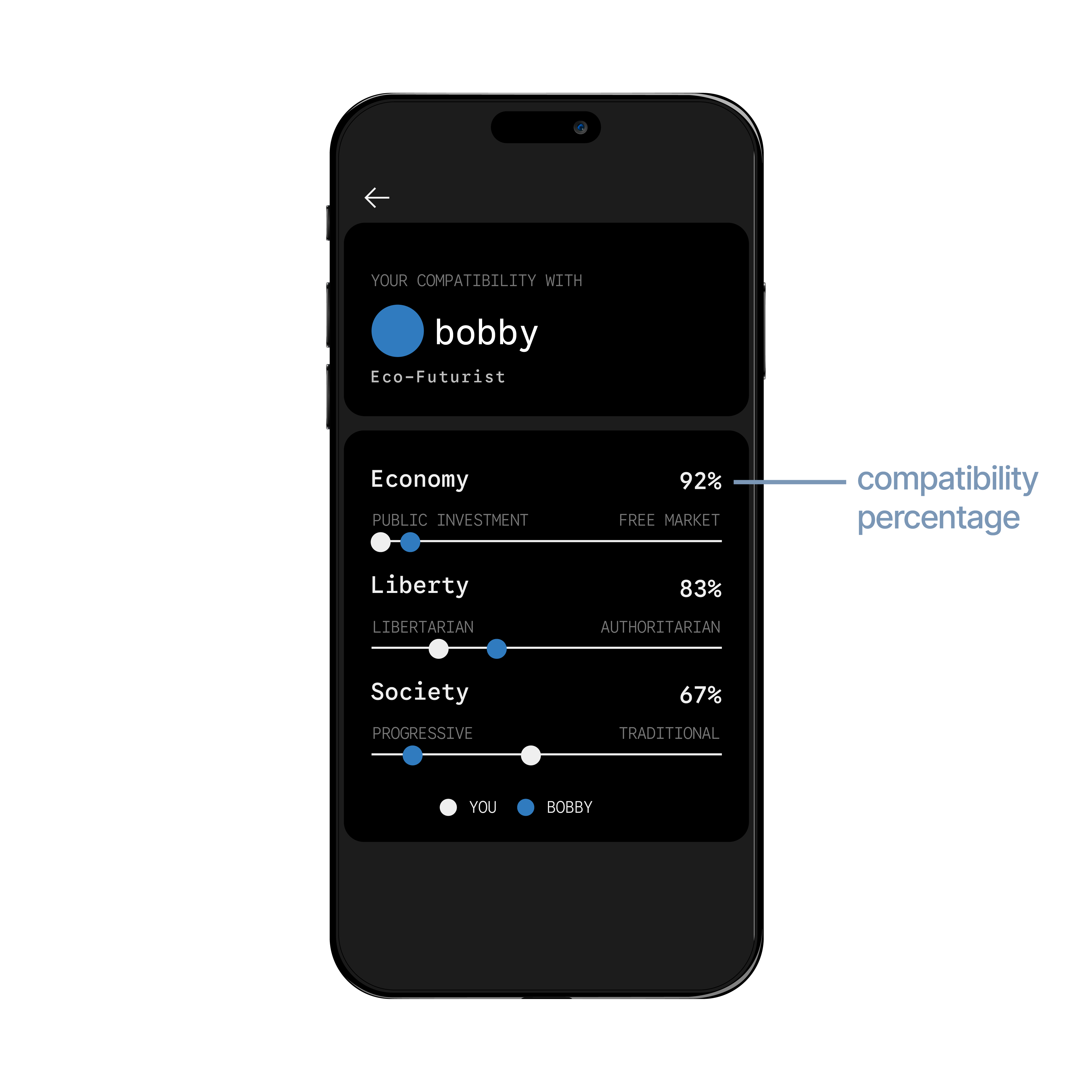
An AI-powered, bipartisan civic engagement app designed to help voters make informed decisions. The app uses a three-axis political spectrum with 27 possible archetypes to map a user’s political identity. It then matches them with candidates and elections based on location, and uses AI to score politicians.
Scoring Logic / The Algorithm
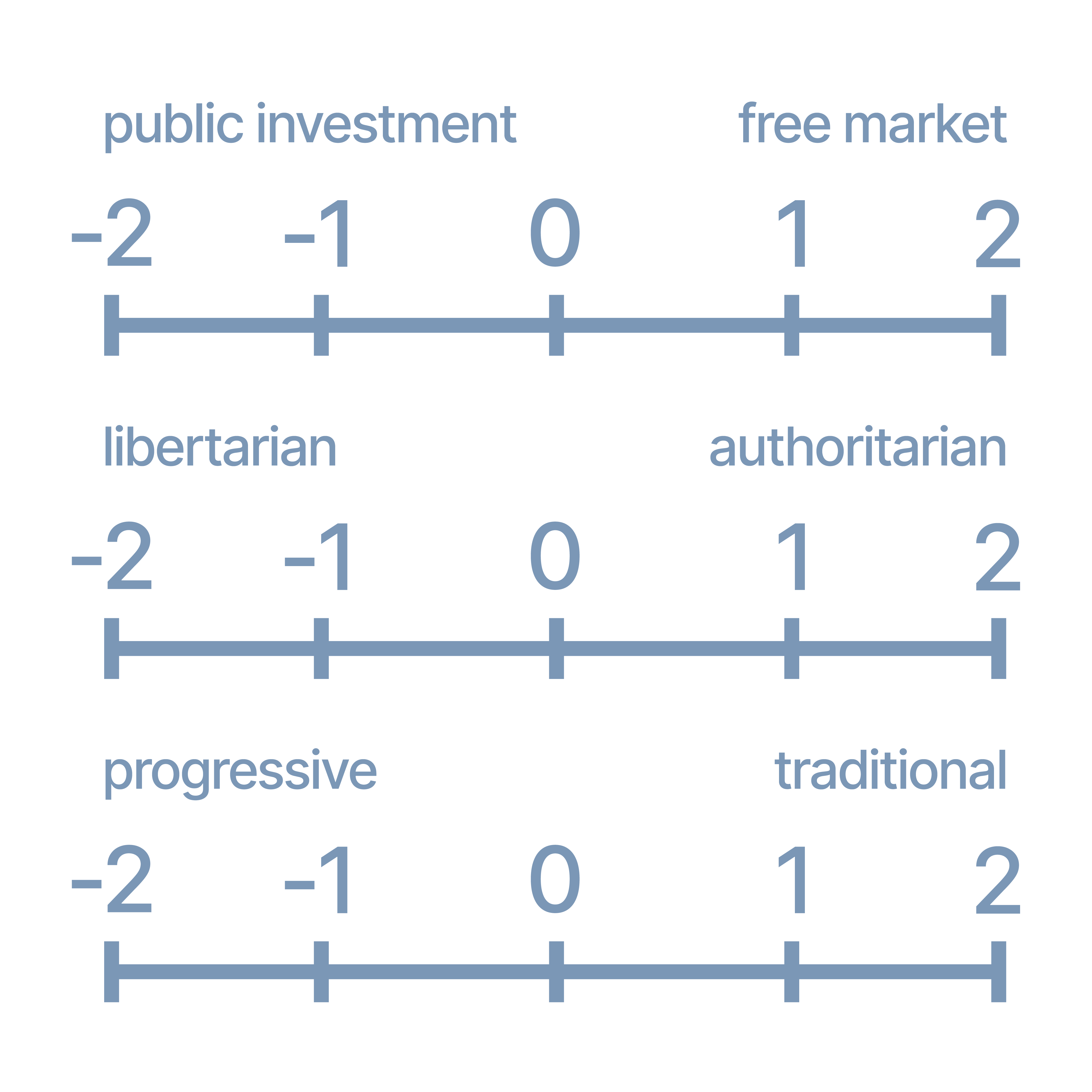
3 Axes: Economy (Public Investment vs Free Market), Liberty (Libertarian vs Authoritarian), Society (Progressive vs Traditional). Each axis goes from left to right (-2, -1, 0, 1, 2).
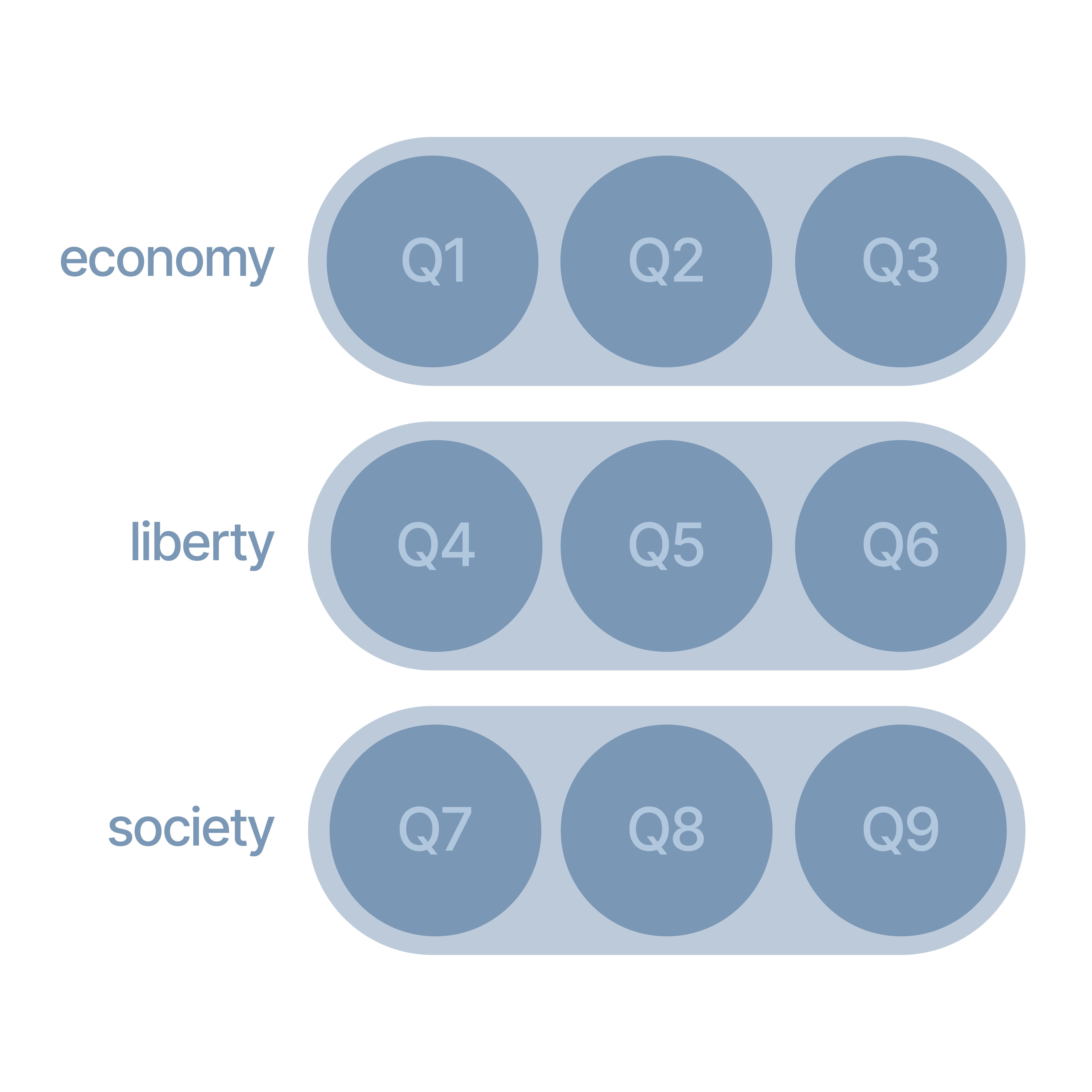
9 Initial Questions, Q1-Q3 = Economy, Q4-Q6 = Liberty, Q7-Q9 = Society.
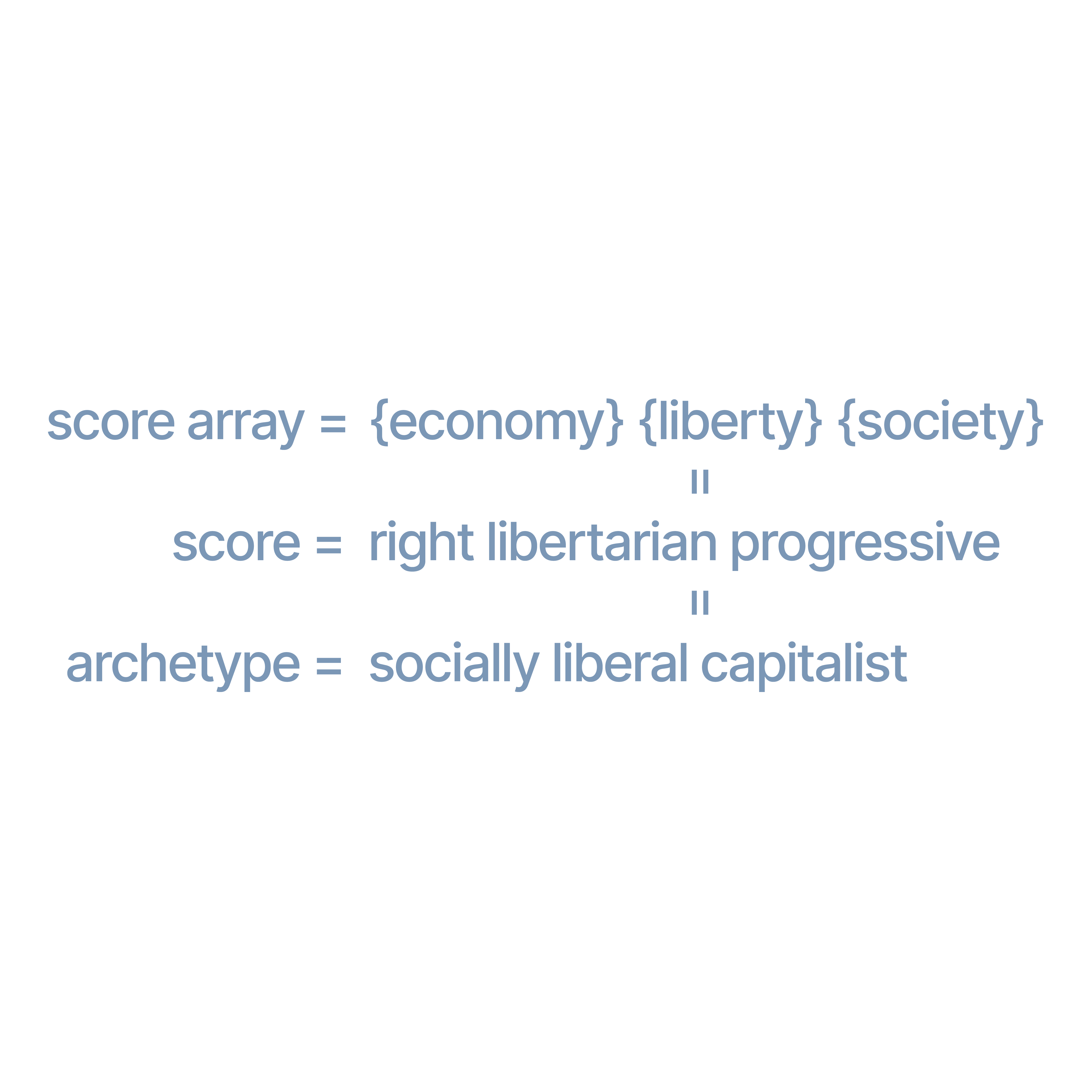
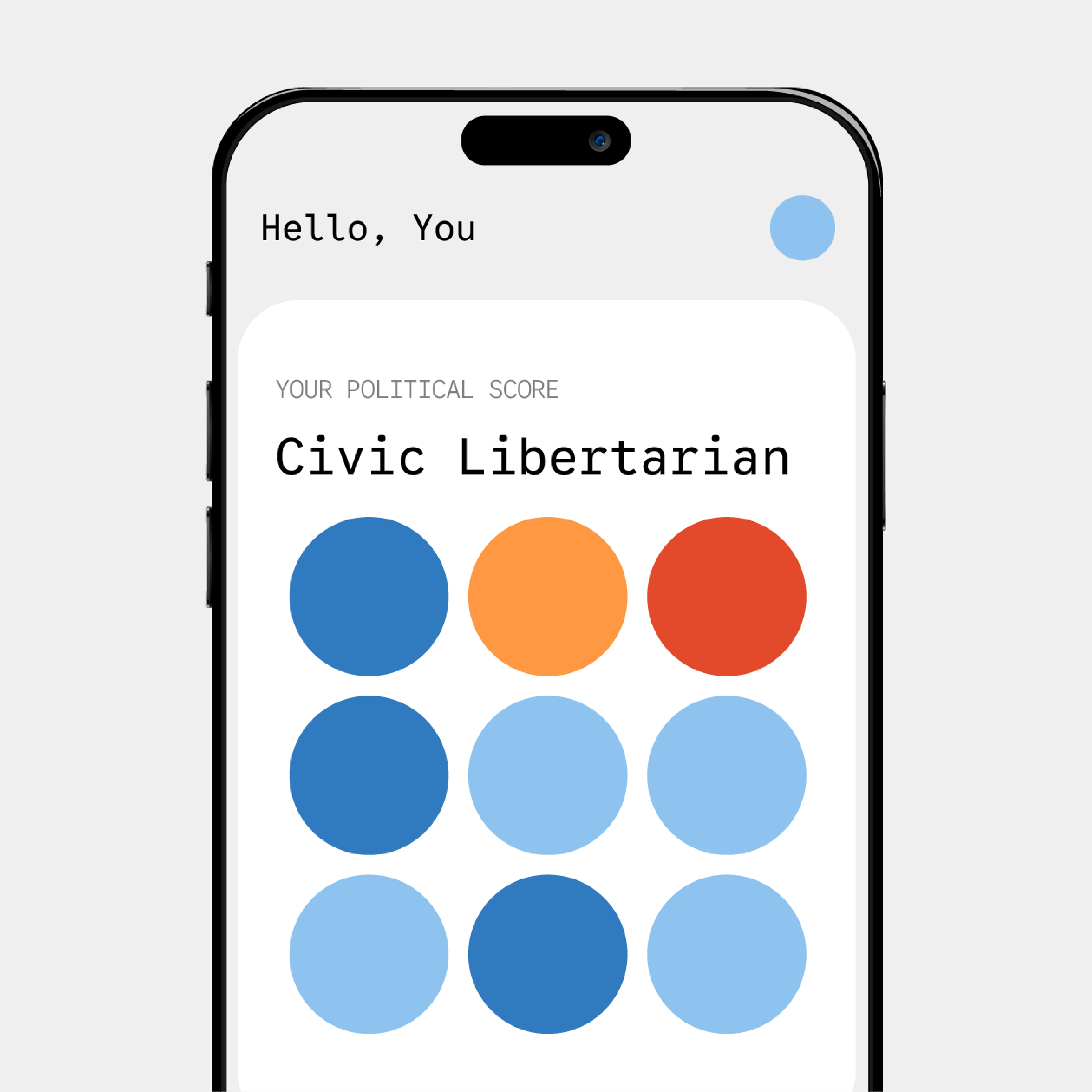
27 Archetypes ({Economy Score}, {Liberty Score}, {Society Score}).
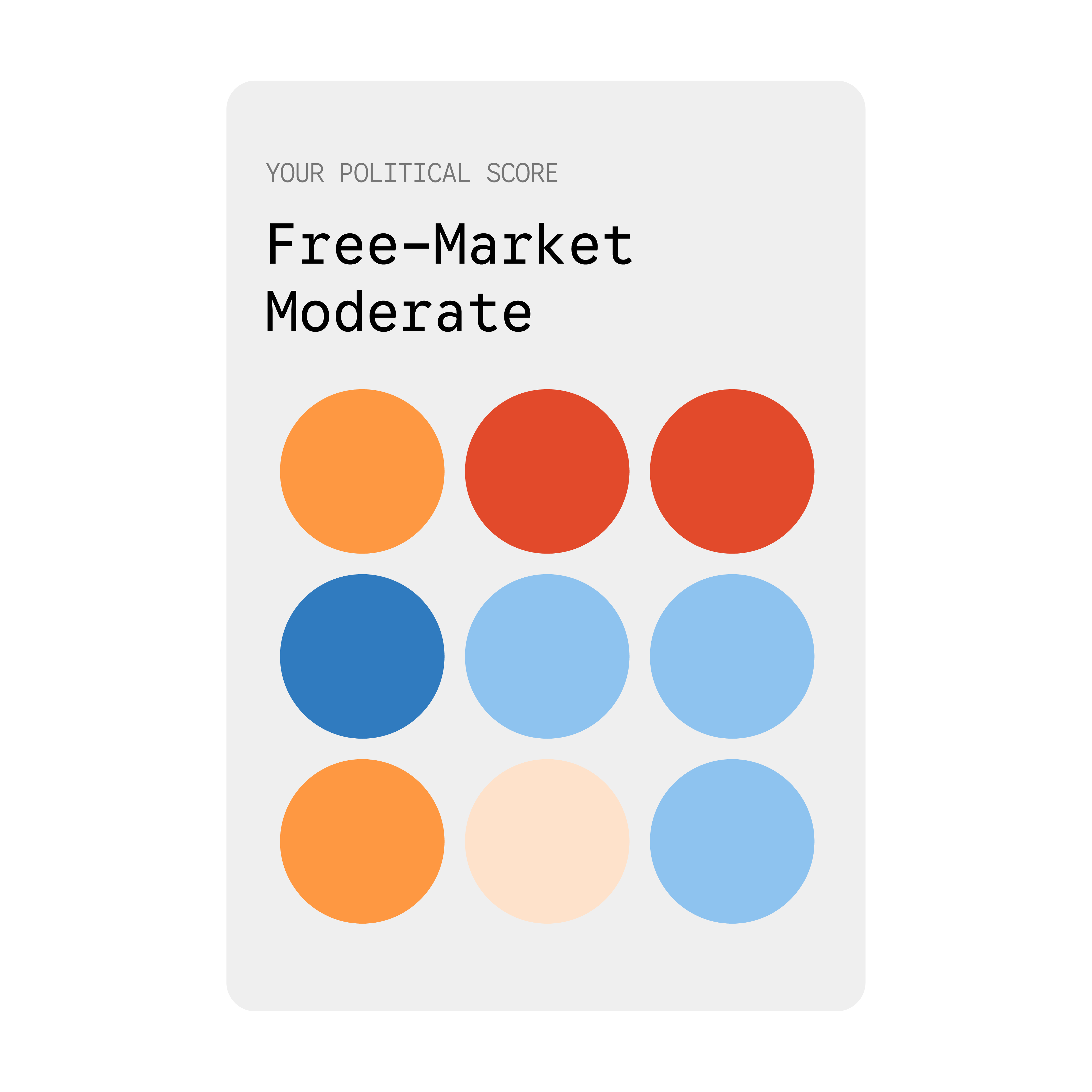
Answers from the 9 questions create a color scoring grid (Dark Blue = -2, Light Blue = -1, Cream = 0, Orange = 1, Red = 2).
AI Integration
Candidate Scoring: I created a scoring system for users, but how could I match users with political candidates without having the candidates themselves take the quiz? I decided to use GPT-4 to act as each candidate during scoring.
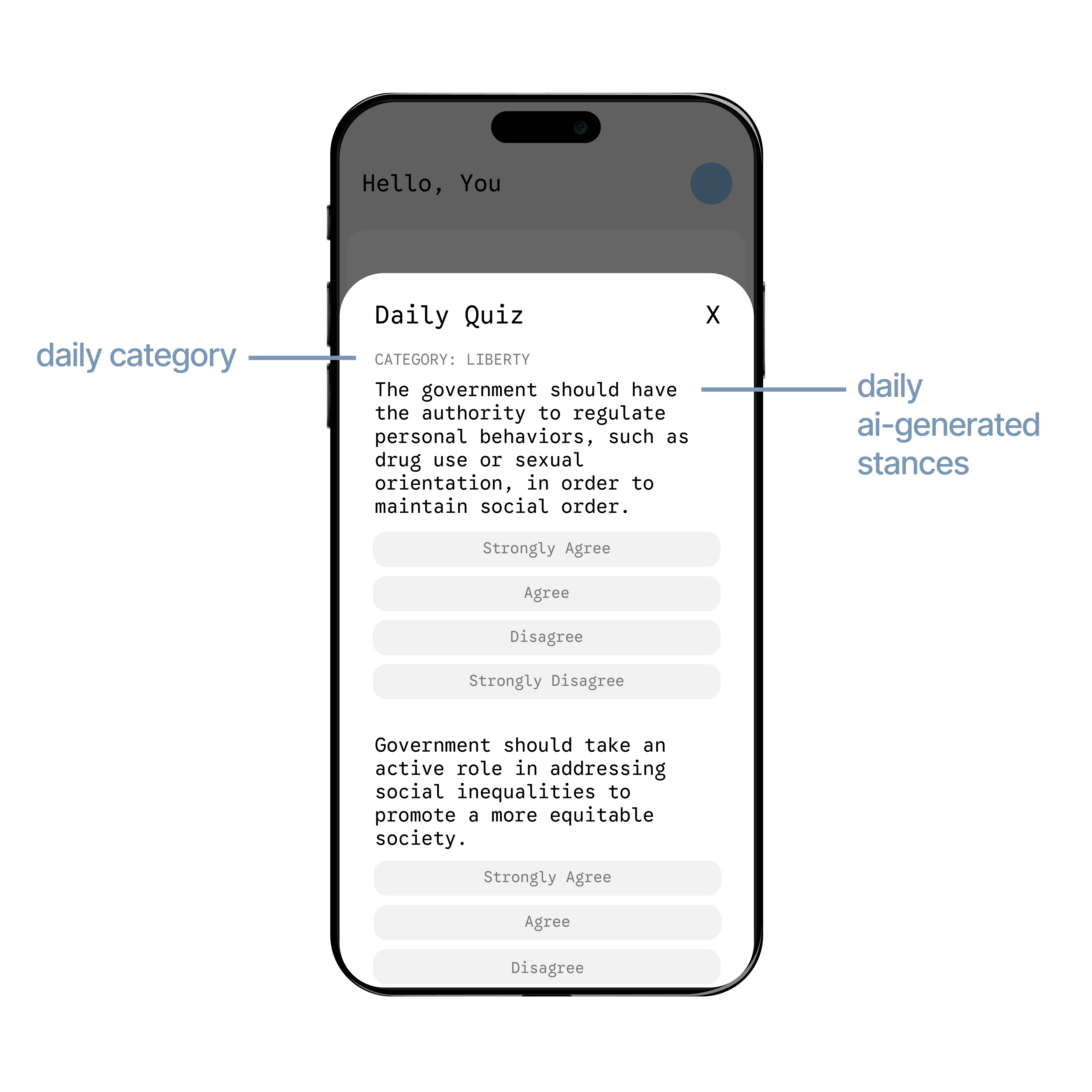
Daily Quiz Generation: In order to stay up-to-date, a category is chosen at random every day (e.g., Society), and then a quiz in that category is created using GPT-4 (3 questions). This is automated in Lambda. If it’s Society, the answers affect Scores 6-8 in the user’s score array.
Hot Takes: Every day, users receive three AI-generated hot takes that align with their political score.
Main Features
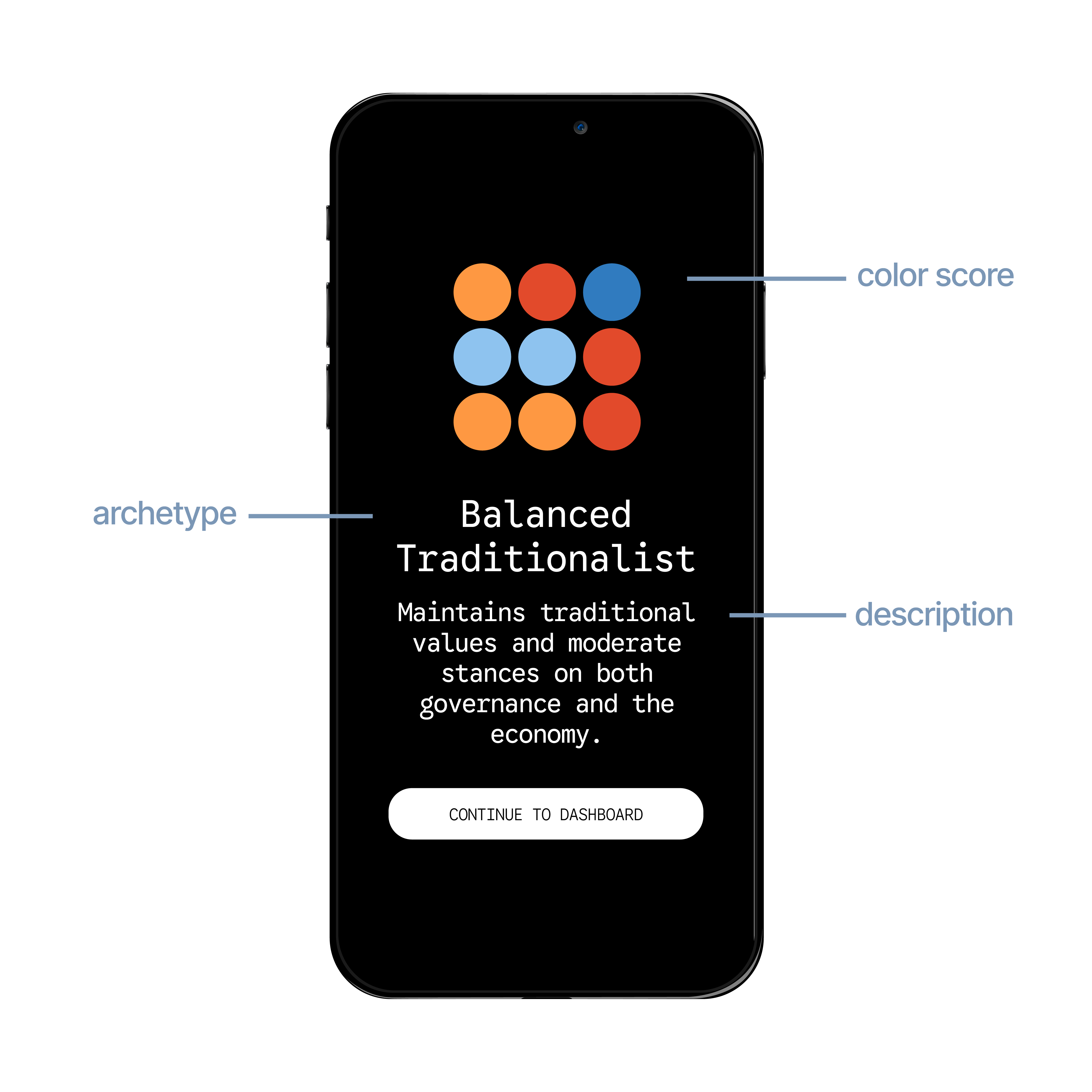
Political Archetypes / Scoring Grid
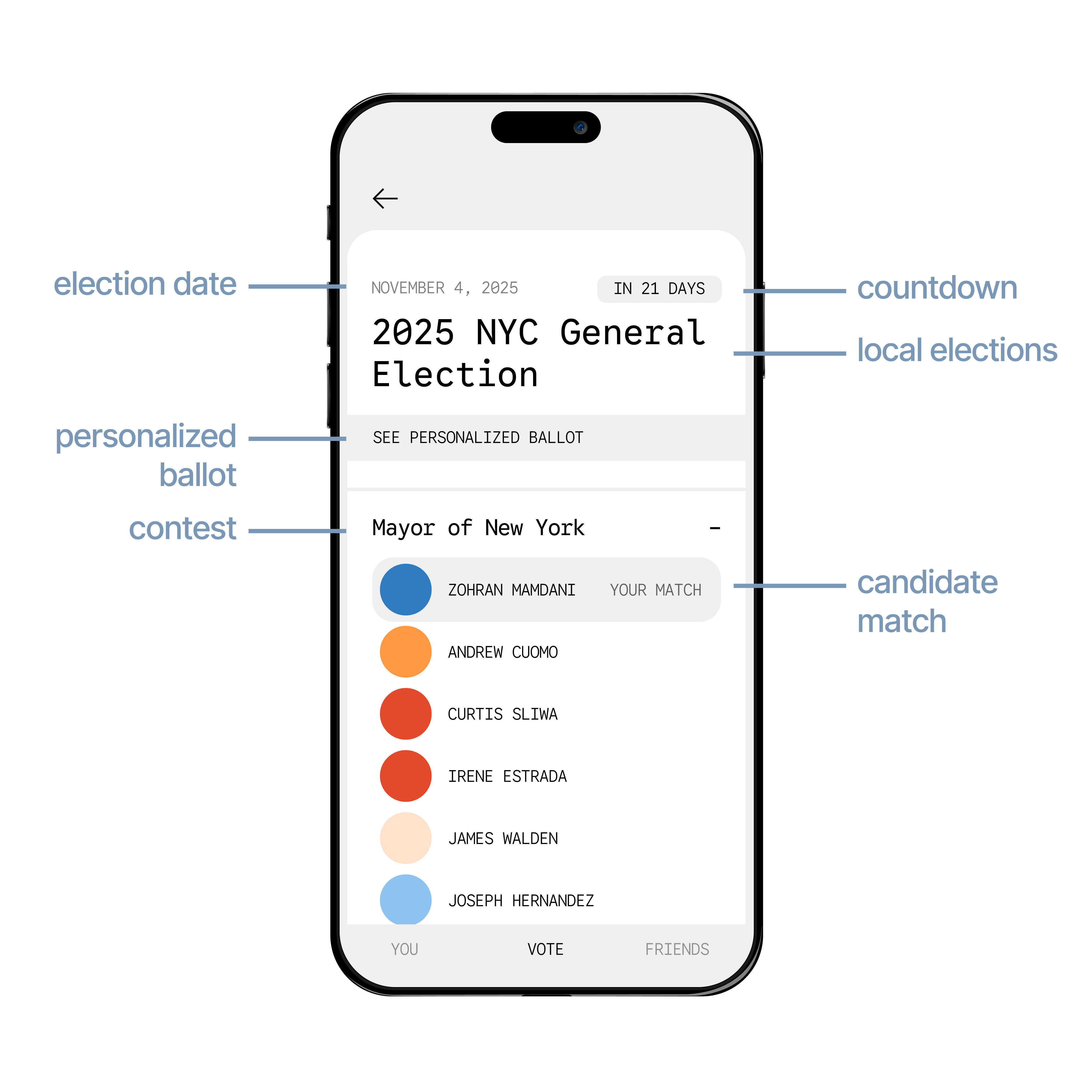
Local Elections / Personalized Ballot / Matches