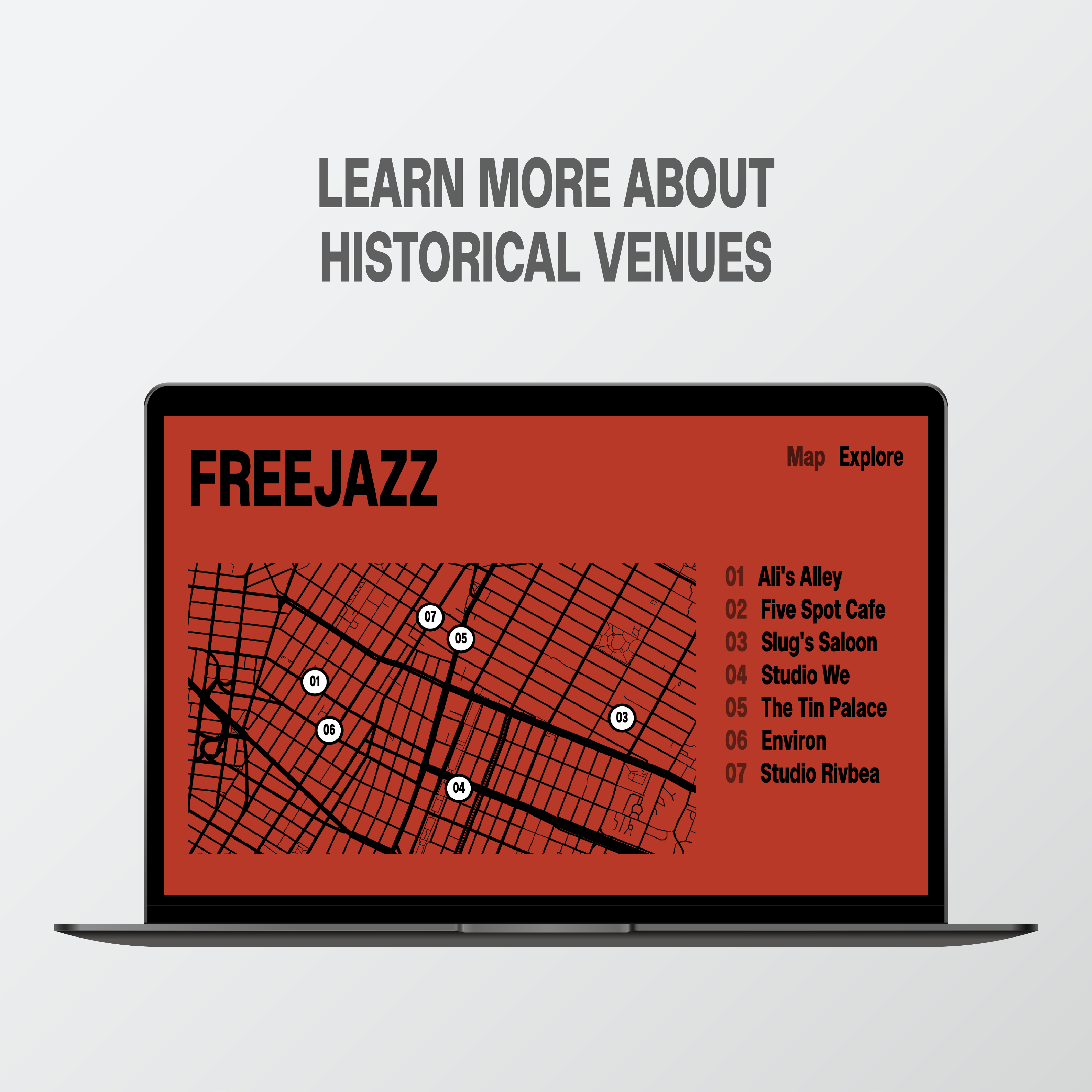
The Problems
1. New York’s free jazz history is scattered across people, venues, recordings, photos, and oral histories.
2. Existing materials are difficult to search, connect, and update without technical support.
3. The archive needed to serve both public exploration and ongoing research workflows.
Process
I started with a UX research survey for the Arts for Art community to understand the archive’s
primary users, content needs, and accessibility expectations. The findings pointed to a clear product
direction: keep the public experience simple, make search and browsing fast, and let the map carry the
structure without hiding the historical context.
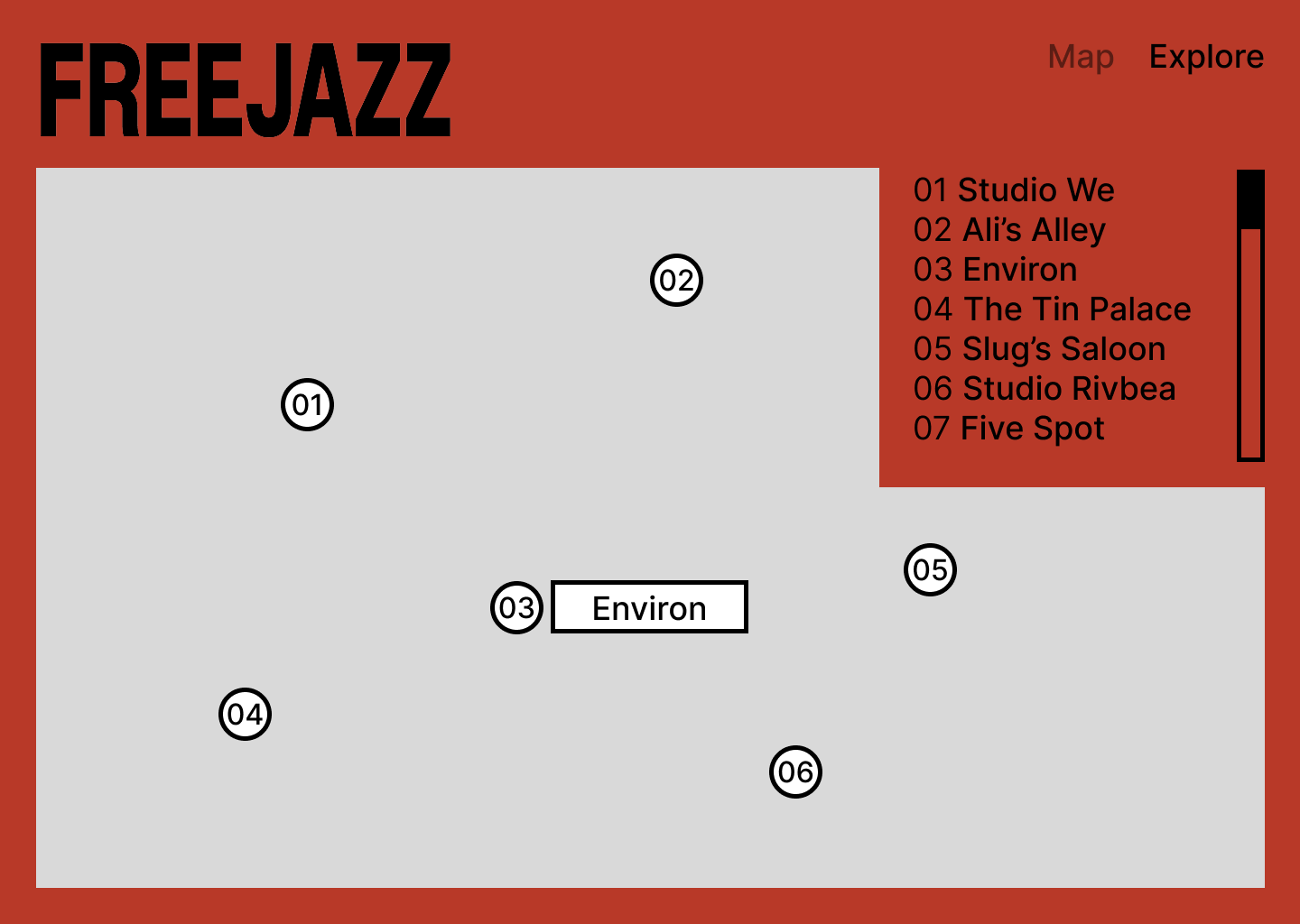
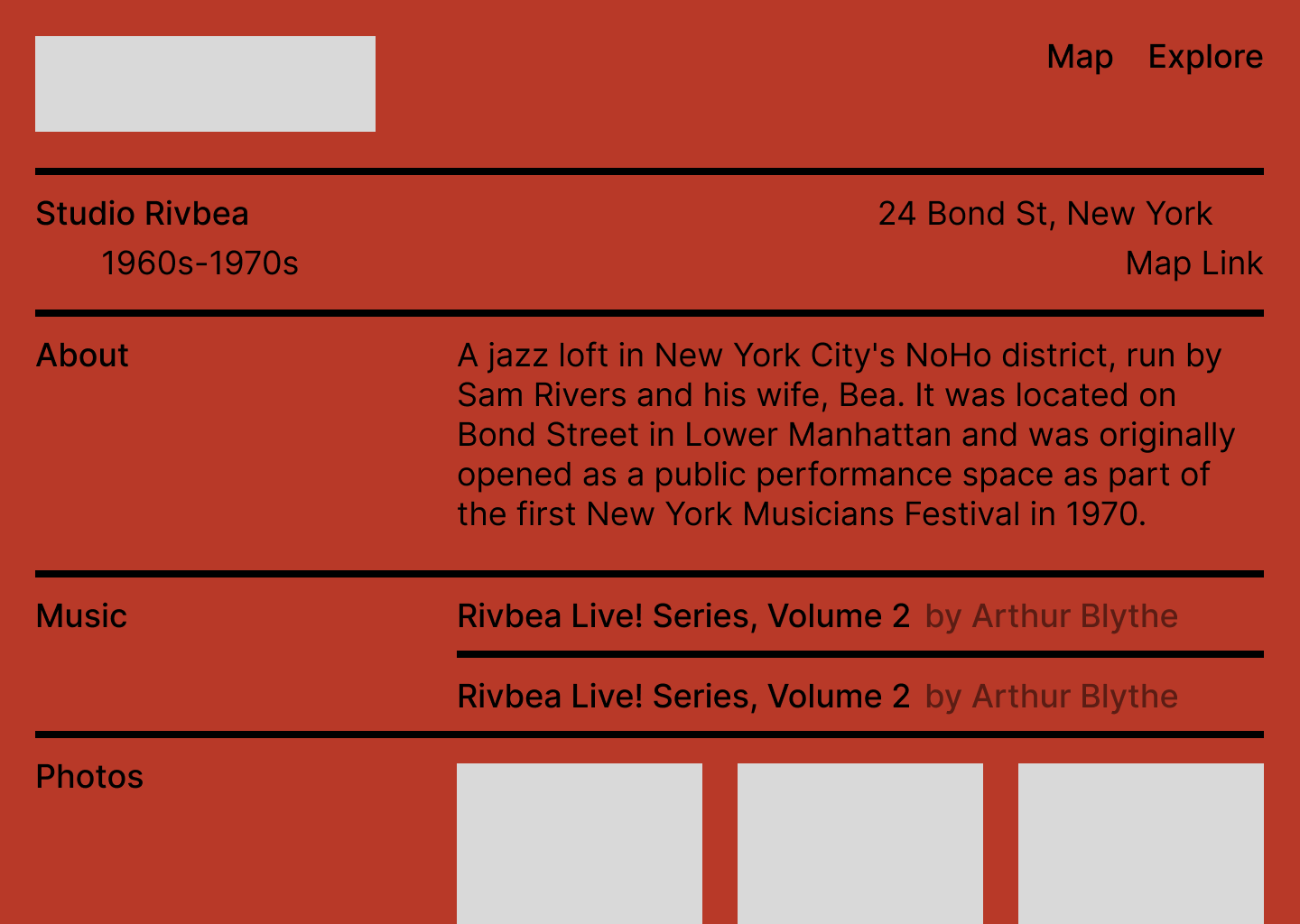
I translated the research into wireframes for a map-based interface. Each location works as an entry
point into the archive, connecting venues to related artists, images, recordings, videos, and historical
notes. The interaction model keeps discovery lightweight while still supporting deeper research paths.
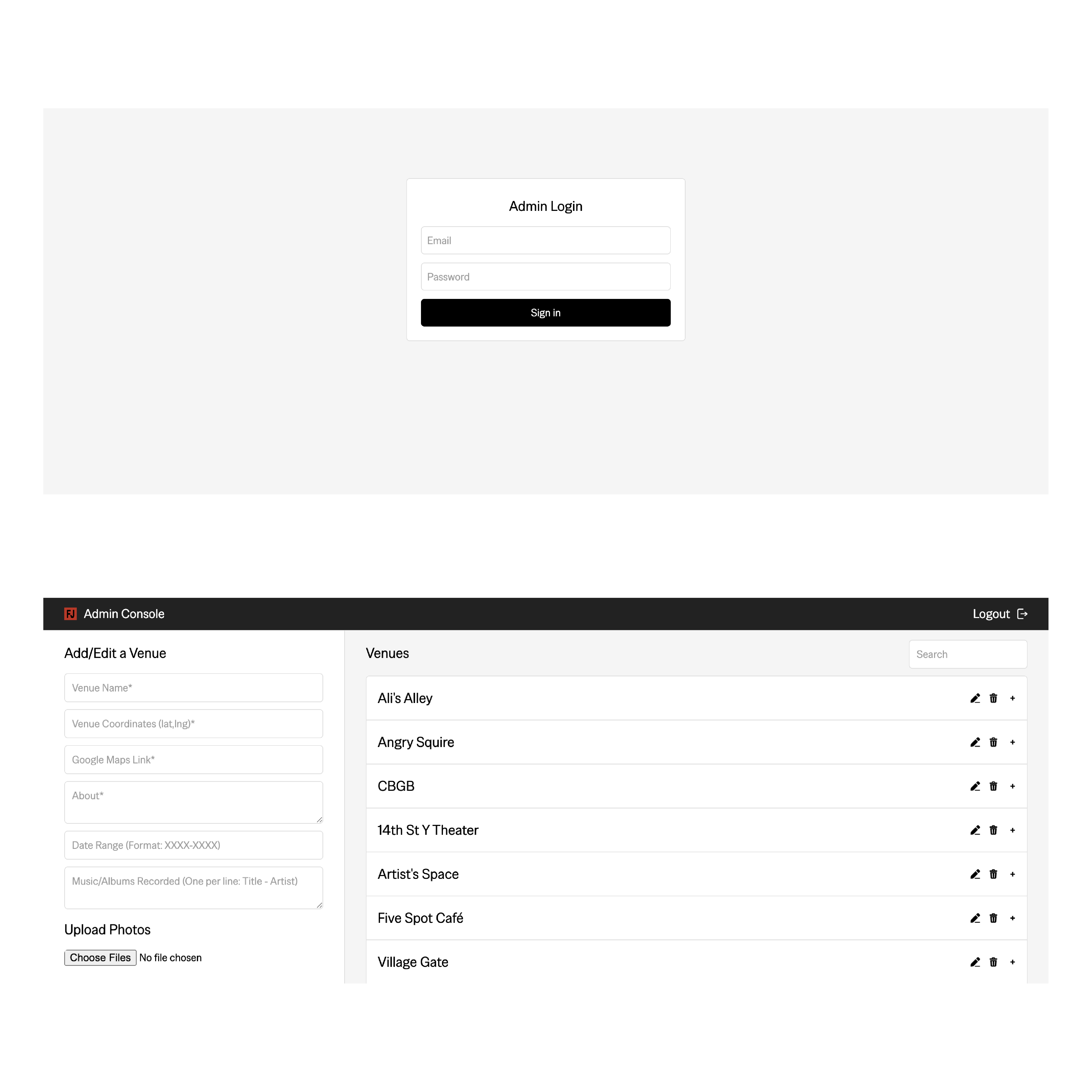
To make the system maintainable, I built a custom CMS for the research team. Researchers can add,
edit, and manage archive entries without touching code. The stack uses Firebase for structured data,
AWS for hosting, and a JavaScript, HTML, and CSS front end designed around reusable content patterns.